
Sieges, street fighting and the next chapter of The Barons’ War have been occupying a lot of my time over the last year.
The first draft of Siege & Urban Warfare is now written, and the question at the heart of it sounds quite simple: how do you turn a medieval siege into a tabletop game without also asking the players to clear their diaries for the next three months?
The challenge has been finding the battles hidden inside the siege.
The idea itself goes back to the first edition of Outremer. We included some fairly basic siege rules because we had released a fort and people needed to be able to attack it. We had ladders, doors that could be broken down and rules for fighting in and around the fort. Combined with the existing rules for fighting through buildings in The Barons’ War, there was enough there to start playing siege assaults.
I knew at the time that I wanted to do more with it.
Castles are such a feature of the medieval period that it always felt like an obvious area for The Barons’ War to explore properly. But I never wanted a siege game to become an evening spent attacking a wall until enough damage had been done for everyone to finally get on with the battle.
The idea in my head was always that a siege should be made up of a series of games. What I did not have was the system that made those games connect in a way that felt like a siege.

That took much longer.
A few months ago I finally found the sentence that unlocked it for me:
We do not play the siege. We play the battles that happen because of it.
Once I had that, I knew what I was trying to build.
A real siege could last for weeks or months. There might be bombardment, mining, shortages, disease, repairs, negotiations, attempts to get supplies in and long periods where very little appeared to be happening at all.
All perfectly interesting if you are reading about a siege.
Possibly less interesting if you are expected to recreate several weeks of slowly starving your opponent on a Tuesday evening.
The trick has been working out how much of that needs to exist between games for the campaign to feel like a siege, without accidentally designing another game that takes place away from the tabletop.
That has probably been the hardest part of the whole book.
What happens between the battles
This is where the choices between games come in. They need to feel like decisions a siege commander might actually face, but they also need to lead us back to the tabletop.
The besieger might try to tighten the blockade, build siege equipment or damage the defences. The garrison might repair damage, improve its position, bring in supplies, or try to send a message asking for help.
Those choices alter the situation and can lead directly to the next tabletop game.
The result of that game then feeds back into the siege.
Perhaps the besieger has managed to damage a section of wall. The garrison must now decide what to do about it. Perhaps they prepare the ground behind the breach and make an assault much harder.
Perhaps a messenger gets through and Relief is approaching. The besieger now has a very different decision to make. Do they continue preparing an assault, or deal with the force coming to lift the siege?
That is the part I really want to see working on the table.
The book tracks things such as Supply, Siege Morale, Relief, damage to the defences and the wider siege position.
They are there to create the next problem.
The players then deal with that problem by playing The Barons’ War.
If we get it right, you should be able to look back over a siege campaign and see why every battle happened and what changed because of it.

A siege is much bigger than an assault
One of the things this approach opened up was the range of battles we could include.
A medieval siege was not simply a queue of men waiting for their turn on a ladder.
You might be attacking a supply column, raiding a siege camp, destroying siege engines, trying to break through the siege lines or stopping somebody carrying a message. A relief force might arrive. The garrison might launch a sortie. Eventually, somebody may have to attack a wall, a gate or a breach.
Sometimes the castle itself will not even be on the table.
I really like that.
It means the campaign can move around the siege rather than every game being another variation on attacking the same stretch of wall.
It also means that when the ladders, rams and breaches do appear, they should feel like part of a much bigger story rather than the only story the siege has to tell.

And then there is Lincoln
The urban warfare side of the book has been there from the beginning too.
Partly that comes from reading about the First Barons’ War and the fighting in places such as London and Lincoln. Benedict had already written scenarios for the King John book covering the fighting in Lincoln, and those got my imagination going.
There is another reason as well.
I live near Lincoln and regularly walk around the castle and the Minster. I have a fairly over-active imagination, so it is difficult for me to walk those streets without thinking about the people fighting there eight hundred years ago.
Steep Hill in particular.
If you have ever walked up it, imagine doing it in armour, carrying weapons and equipment, while somebody at the top is trying to kill you.
I wanted to be able to put that sort of battle on the table.
Not just a fight that happens to have a few houses around it, but a game where streets, buildings, alleys, courtyards, barricades and strongpoints change how you move and fight.
Urban warfare therefore has its own place in the book. You do not need to play a siege campaign to use it. You can fight through a town or village as a one-off game, just as you can play a siege assault without committing to an entire campaign.
I want the book to give players all three options: one-off siege games, full siege campaigns and urban battles.
And I want all of it to feel as though it belongs naturally alongside the existing rules.

Why now?
None of this arrived all at once.
We are always jotting things down, trying ideas and setting things aside to return to later. King John took us further into fighting in towns, while ideas for siege scenarios and campaigns have been accumulating alongside everything else we have been doing.
We are also working on Outremer Second Edition for 2027, so this felt like the right time to pull the siege material together properly. Siege warfare is hardly an exclusively English past time, and returning overseas gives us even more reason to make it a proper part of the game.
Over roughly the last year the work has been a mixture of historical research, old notes, new rules, scenario design and trying to build the campaign framework that joins it all together.
Instead of trying to play the whole siege, we play the individual actions within it.
That sounds simple written down now.
It was not simple getting there.
An excuse to build far too much scenery
Of course, once you start thinking about all these different battles, you also start thinking about the tables they need.
Castle walls, camps, siege engines, ladders, damaged gates, breaches, barricades, streets, markets and burning buildings.
There is a lot to build.
Fortunately, you do not need all of it at once.
One scenario might take place around a breach. Another could be in the siege camp. Another might be fought along a road as supplies are brought towards the garrison. Urban games will need a completely different table again.
I like the idea that the terrain can change with the campaign too.
If a wall has been breached, it can stay breached. New defences might appear. Siege works can grow. Buildings can be damaged or burnt.
By the end of the campaign, some of what has happened should be visible just by looking at the table.
For somebody who likes building medieval scenery, this book may be extremely bad news.

Now we have to break it
The first draft is written.
I was always aiming for a substantial book, roughly comparable in scope to the main rulebook, although I have no idea what the final page count will be yet. Nor should I at this stage.
Now comes the important bit.
Playtesting.
Lots of it.
We need to know whether the scenarios are fun and balanced, whether the new rules sit comfortably alongside the existing game and, most of all, whether the campaign produces the feeling I have been chasing.
Do the decisions between games create interesting battles?
Does the result of one battle change what happens next?
Do players feel that they are directing a siege rather than simply following a sequence of scenarios?
And does all of that happen without the campaign getting in the way of the tabletop game?
Benedict still needs to read the manuscript and feed his thoughts into it. It will also be going to Mark Vance, George Asling and other people whose judgement I trust.
I fully expect parts of it to change.
That is why they are getting it now rather than after we have printed the thing.
What I find encouraging is that, after more than five years of working on The Barons’ War, I am still excited by where it can go. The game has been more successful than I ever imagined, which is both wonderful and a little humbling.
I was lucky enough to write the game I wanted to play.
The best part is that I still want to play it.
I still read something in the history and immediately start wondering how we could put it on the table. I still walk around Lincoln imagining Warriors fighting their way through the streets. And I can still spend months wrestling with an idea and get ridiculously excited when it finally clicks.
That is really how Siege & Urban Warfare grew. I started with the siege rules we already had and wanted to see how much further we could take them. One idea led to another, then another, until I realised there was a much bigger game hiding there.
Now we find out if it works.
And if we get this right, sometime in 2027 I am going to need a lot more castle walls.
Comments
Comments are moderated before they appear.
No comments yet.
Leave a comment
More articles
BROWSE THE JOURNAL
Rules
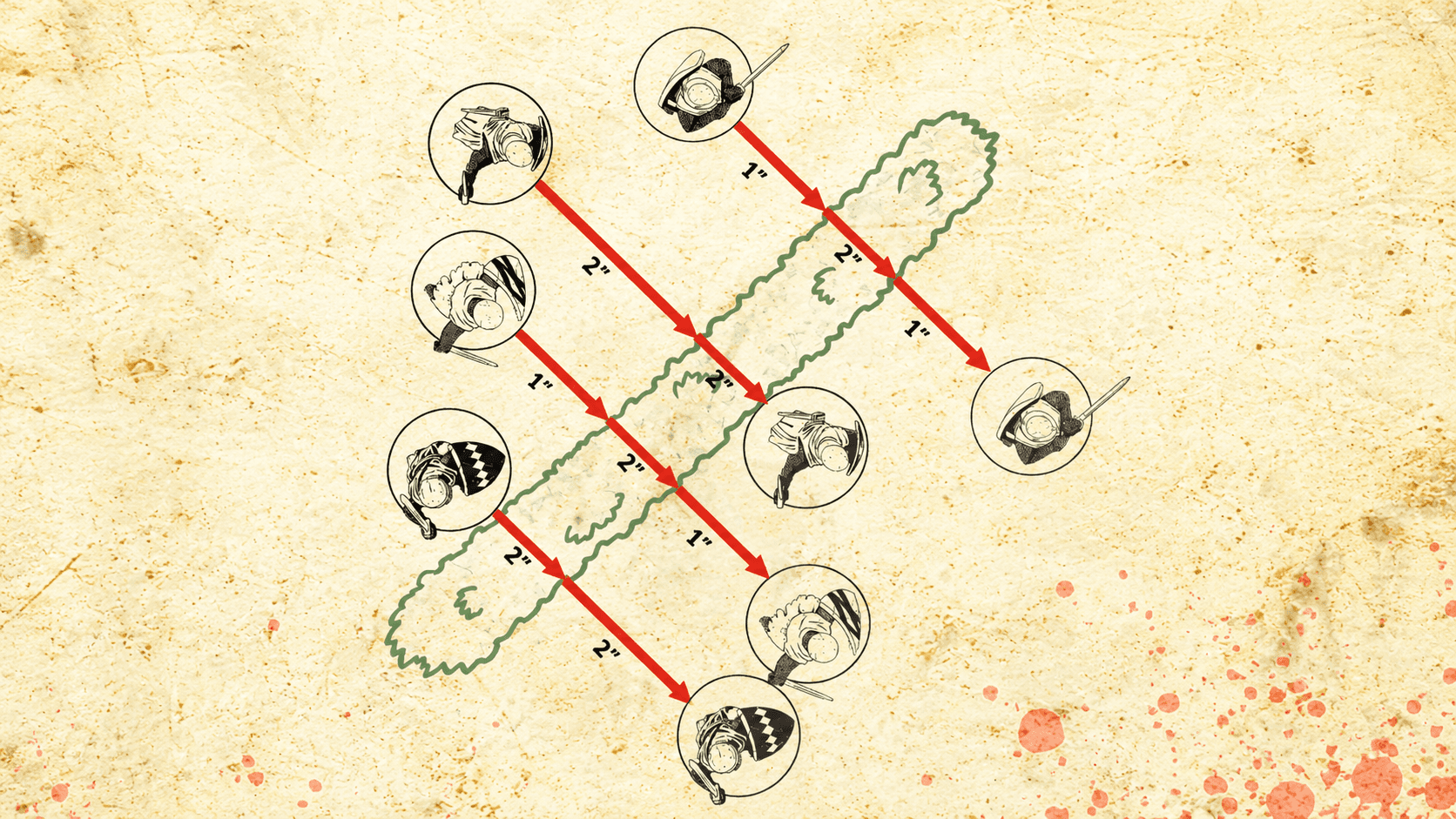
A proposed update to how Groups cross Obstacles in The Barons’ War, covering Charges, Defensive Positions, Forced Back, Regroup and Defend Actions for playtesting.

The Way We Play
A new column about the habits, assumptions and small decisions that shape tabletop gaming, and why some of them are worth looking at again.

Projects
The new Conquest lists have been designed to give players more ways to represent early medieval forces on the tabletop.
FROM THE BLACK DESK
Subscribe to my occasional newsletter for notes from my desk about games I’m designing, things I’m playing, miniatures, the hobby and new writing from the site. I promise to only send the good stuff - no spam here!