
Warhammer Fantasy: Dark Elves vs Dwarves. Photograph by RedCraig, cropped, CC BY-SA 2.0 via Wikimedia Commons.
Every now and again somebody asks me why I still play with toy soldiers.
It’s a fair question. I’m fifty-four years old. By most people’s standards, I should probably have found a grown-up hobby by now.
For years I never really thought about the answer. Then, not so long ago, I caught myself asking exactly the same question. Not because I was getting bored. If anything, I enjoy miniature wargaming more now than I ever have.
I thought writing this article might help me answer it.
Instead, it reminded me of Quentin.
We were both fifteen when he invited me over for a game one Saturday afternoon.
Quentin had somehow managed to fit a full-size table tennis table into his bedroom. Even more incredibly, there was still enough room to walk all the way around it. It was covered in green cloth with homemade hills and woods, with our two painted armies waiting to be deployed. Kate Bush, Jean-Michel Jarre and Mike Oldfield played quietly in the background. That wasn’t by accident. Quentin had chosen the music because he thought it suited the battle we were about to fight.
If I saw that table today, I’d probably notice every wonky hill and badly flocked hedge. At the time, I thought it was the best thing I’d ever seen.
I’d spent months reading Warhammer Fantasy Battles. I knew the rules almost by heart. I’d filled notebooks with army lists and ideas, but this was the first time I’d seen someone my own age actually living the hobby.
Quentin’s army was Elves and mine was Dwarves. His regiments carried hand-painted banners showing which lord each unit belonged to.
Mine didn’t.
The funny thing is, I don’t really remember the game. I couldn’t tell you who won. What I remember is how I felt when I left.
I don’t remember the walk home because I spent the entire journey replaying the afternoon in my head. By the time I got home, I wasn’t interested in dinner. I went straight upstairs, pulled out my army list and quietly binned it.
My general suddenly needed a name. My army needed a story. I wanted people to look at it and know it was mine.
I spent the rest of the weekend starting again, not because Quentin had a better army, but because he’d shown me what the hobby could be.
Not long afterwards I went away to boarding school. Like most teenagers, life moved on. I still played plenty of roleplaying games, but the boxes of figures stayed at home and miniature wargaming quietly slipped into the background for a while.
Then, at nineteen, I started working for Games Workshop.
People often ask me what that was like. They’re usually hoping for stories about famous names or exciting product launches.
The truth is, what I remember most is talking about games.
There was no internet as we know it. No forums. No Facebook groups. If you wanted to debate a rule or discuss a new army idea, you had to find another person.
So that’s exactly what we did.
By lunchtime, somebody usually had a copy of Warhammer Fantasy Battles open on the counter because we’d started arguing about something. Customers would join in, somebody would insist the answer was hidden somewhere in an old White Dwarf, and before long we’d already decided what we were playing after the shop shut.
Most evenings, a few of us stayed behind for a game. During quieter moments we’d paint reinforcements, convert new figures bought with our staff discount, or stand around an open rulebook happily debating a paragraph that probably wasn’t as complicated as we were making it.
The game itself was only part of it.
By the time we unpacked our armies, we had often spent half the day talking about what we were going to play. The next morning we would be back again, arguing about what had happened the night before and planning the next battle before we’d even opened the doors.
I think that is one of the things I understood without ever really putting it into words.
A game doesn’t necessarily begin when the first dice are rolled.
Sometimes it begins with an army you want to collect, a battle you’ve been reading about, a piece of scenery you’ve decided you absolutely need, or a conversation after the last game that sends you home thinking, “What if…?”
By the time the figures reach the table, you may already have been playing the game in your head for days.
And when it’s over, there is usually another one beginning.
Some of my strongest memories aren’t of games themselves. They’re of planning them, building them, looking forward to them and talking about them afterwards.
Perhaps that’s why I’ve never been particularly bothered when somebody dismisses miniature wargaming as playing with toy soldiers.
From the outside, I can understand why it looks that way.
From where I’m sitting, those little figures introduced me to history, painting, modelling, photography, writing and game design. They also introduced me to friendships that have lasted most of my life and took me to places all over the world I probably never would have visited otherwise.
When I was fifteen, it was all about building the army.
A few years later I became obsessed with painting. Then I disappeared down a rabbit hole of rules. Before I knew it, I was building scenery and designing games.
These days I get just as much enjoyment from seeing somebody else’s army come to life as I do from rolling the dice myself. I love reading about a great game someone has had. I love seeing somebody bring a friend into the hobby, or introduce their son or daughter to it for the first time.
I don’t think any of those earlier versions of the hobby went away.
I just kept finding more things to enjoy about it.
So perhaps I still haven’t quite answered the question I started with.
My phone regularly lights up with photographs of newly painted armies, messages about someone’s first game in years, battle reports, rules questions, or emails from people who simply want to show me what they’ve been working on.
I read every one and try to answer as many as I can.
And occasionally one of them makes me think about Quentin.
I often wonder whether he remembers that game at all. I certainly do.
To him it was probably just another Saturday afternoon spent playing toy soldiers with a school friend.
One game.
One conversation.
One invitation to sit down at a table.
Over to you…
What game changed the way you looked at miniature wargaming?
It might have been your first game, the first miniature you painted, a particular opponent, a club night, or simply the moment you realised this hobby was going to become something much bigger than rolling dice.
I’d love to hear your story.
Comments
Comments are moderated before they appear.
No comments yet.
Leave a comment
More articles
BROWSE THE JOURNAL

Projects
The first draft of Siege & Urban Warfare is now written. Here’s how I’m trying to turn a medieval siege into a series of connected tabletop battles without losing what makes a siege feel like a siege.
Rules
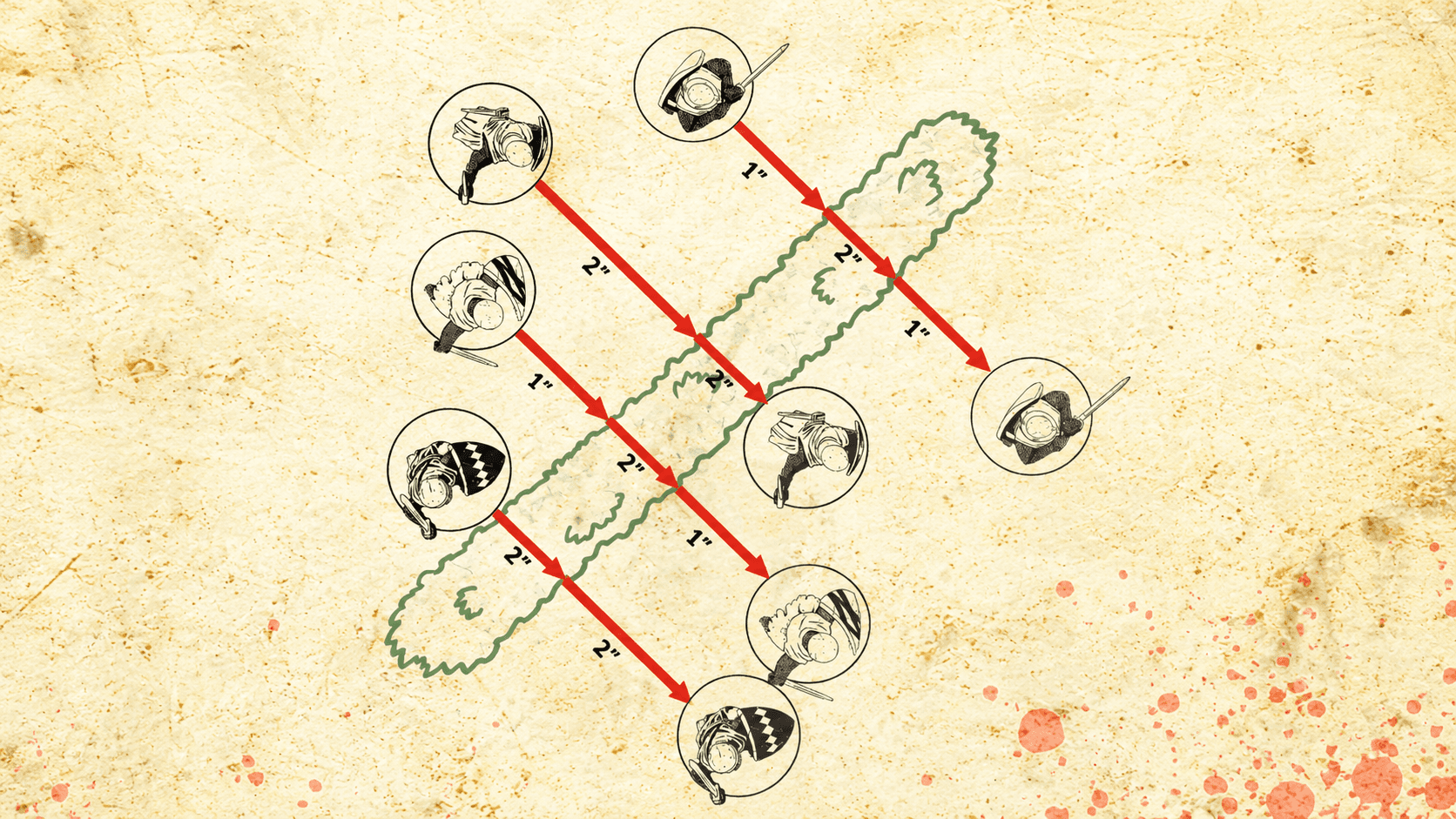
A proposed update to how Groups cross Obstacles in The Barons’ War, covering Charges, Defensive Positions, Forced Back, Regroup and Defend Actions for playtesting.

The Way We Play
A new column about the habits, assumptions and small decisions that shape tabletop gaming, and why some of them are worth looking at again.
FROM THE BLACK DESK
Subscribe to my occasional newsletter for notes from my desk about games I’m designing, things I’m playing, miniatures, the hobby and new writing from the site. I promise to only send the good stuff - no spam here!